




What’s an Awning Wall, and Do You Really Need One?
August 20, 2025
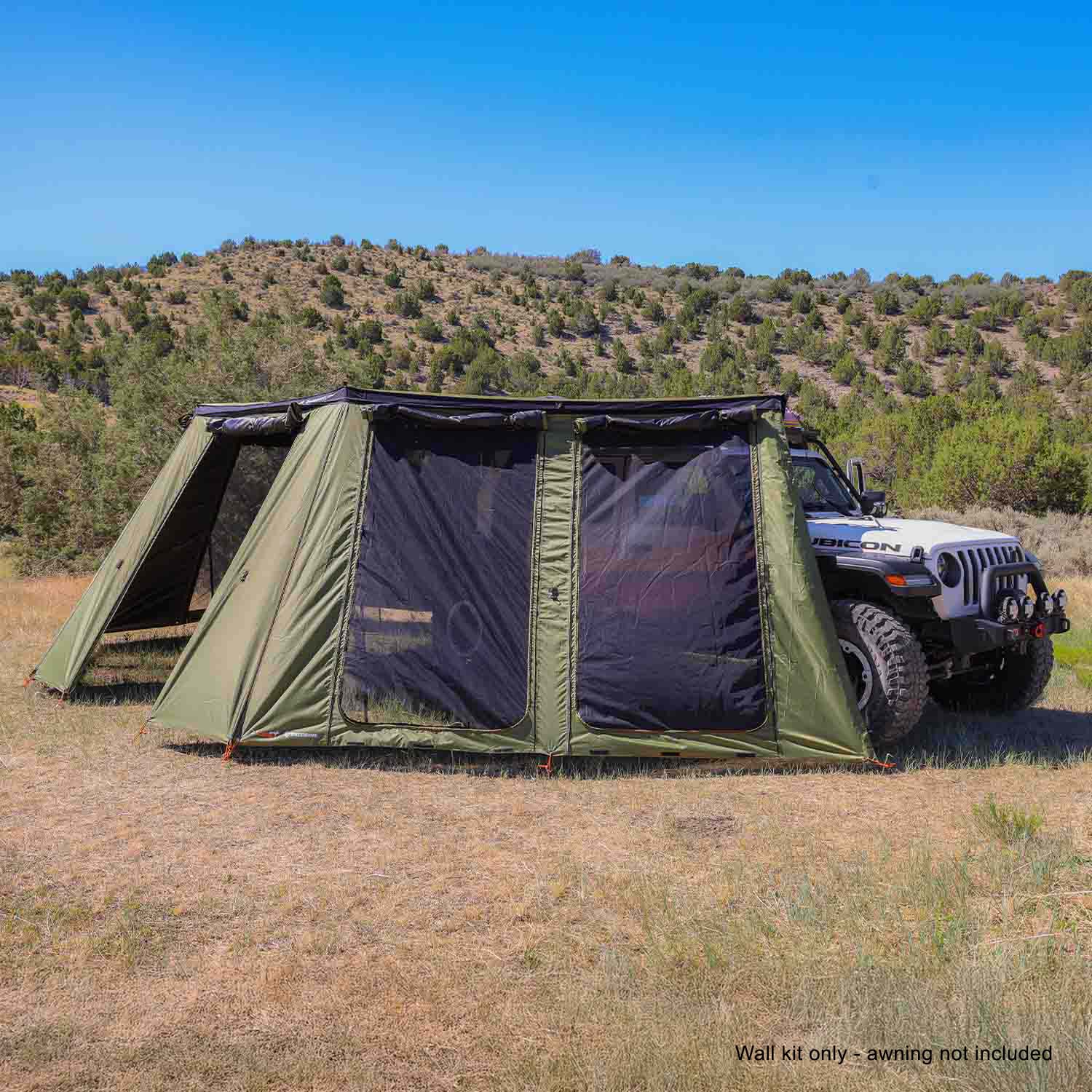
If you’ve ever been mid-camp and thought, “Man, I wish I had a little more shade, or a spot to get out of this wind” — you’ve already asked yourself the awning wall question.
At 23ZERO, we live outdoors. Our team spends more nights in rooftop tents than in hotels, and over the years we’ve tested every combo of tents, awnings, and wall kits. So when people ask us things like “What’s an awning wall?” or “Which one should I get?” we’ve got plenty of first-hand answers.
Awning Walls: The Camping Upgrade You Didn’t Know You Needed
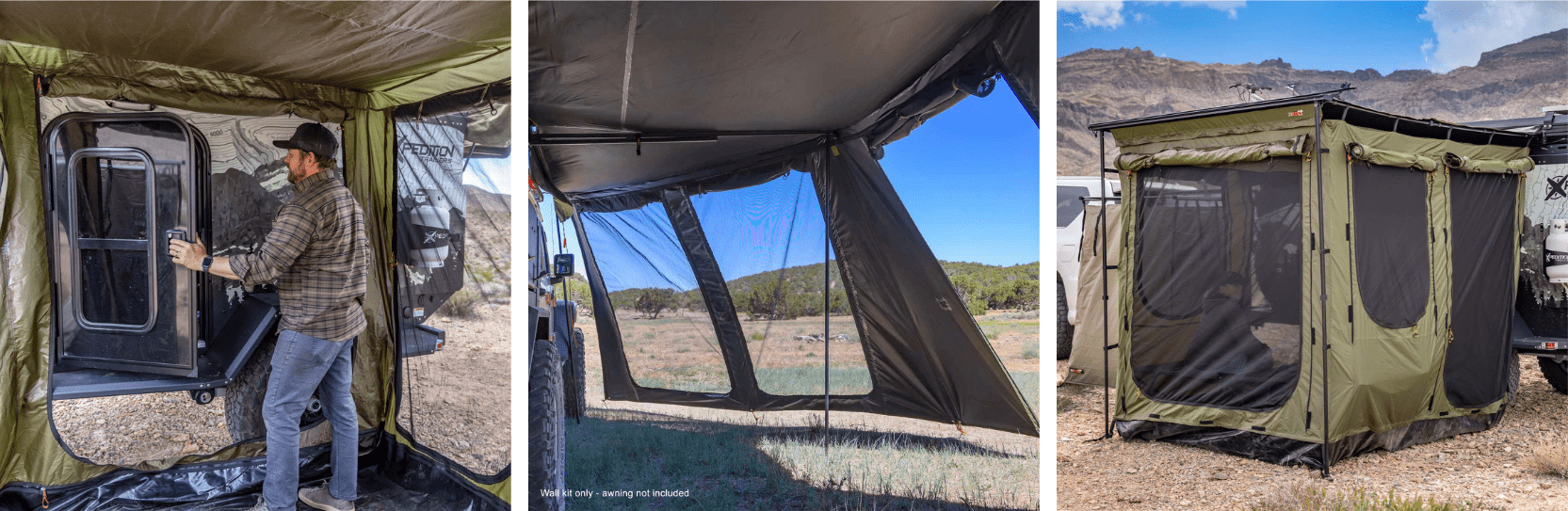
When you’re setting up camp, your awning already provides shade and shelter — but with the right awning walls (also called awning shade walls, awning side panels or awning rooms), you can transform that open shade into a private, cozy private outdoor living space. Whether you’re looking to block the sun, cut the wind, or create a more enclosed shelter for your family, friends, or pets. Walls are one of the most versatile upgrades you can add to your overland or camping setup.
In this post, we’ll break down:
- What an awning wall actually is
- Why you might need one
- The different types of awning walls available
- How to choose the right wall for your awning
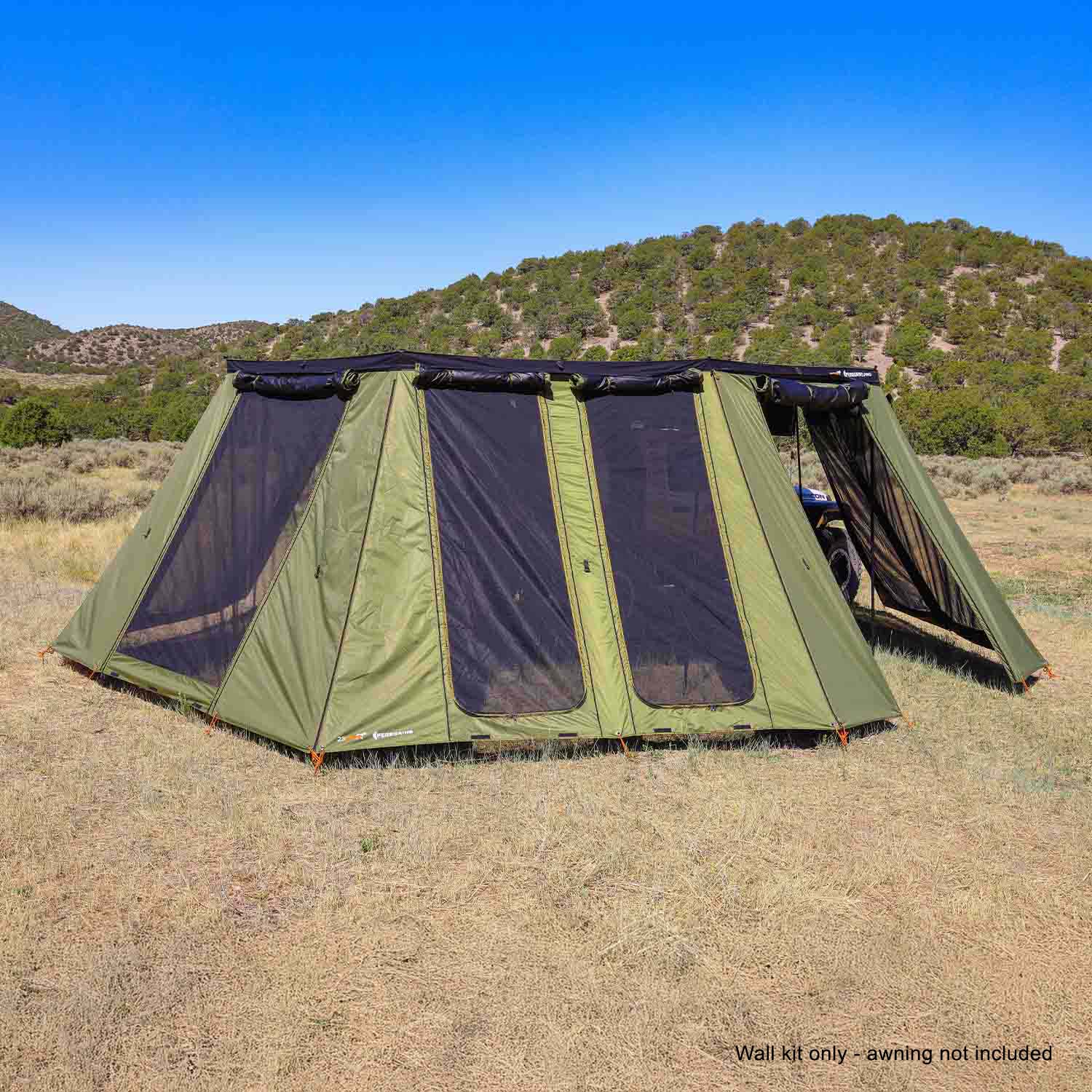
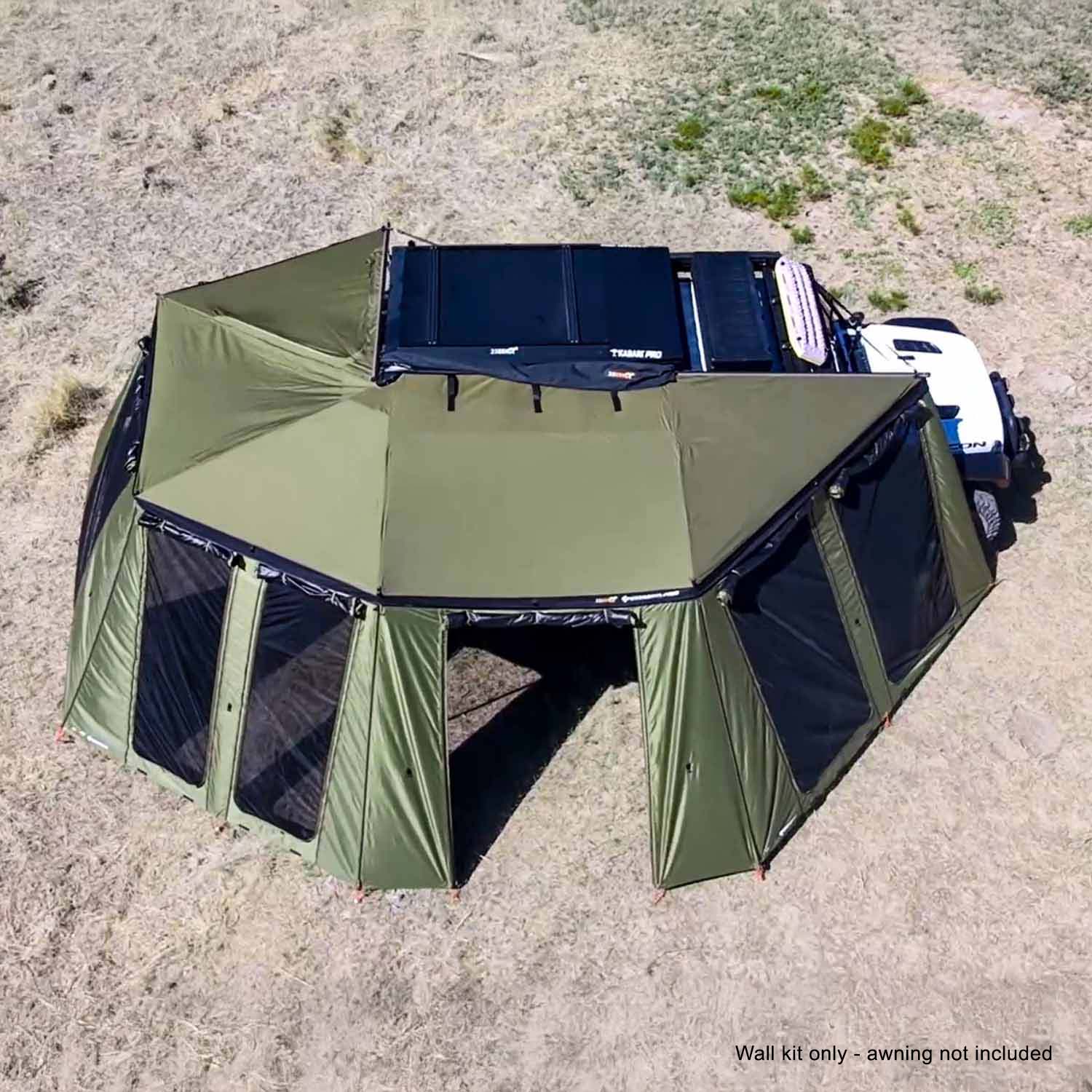
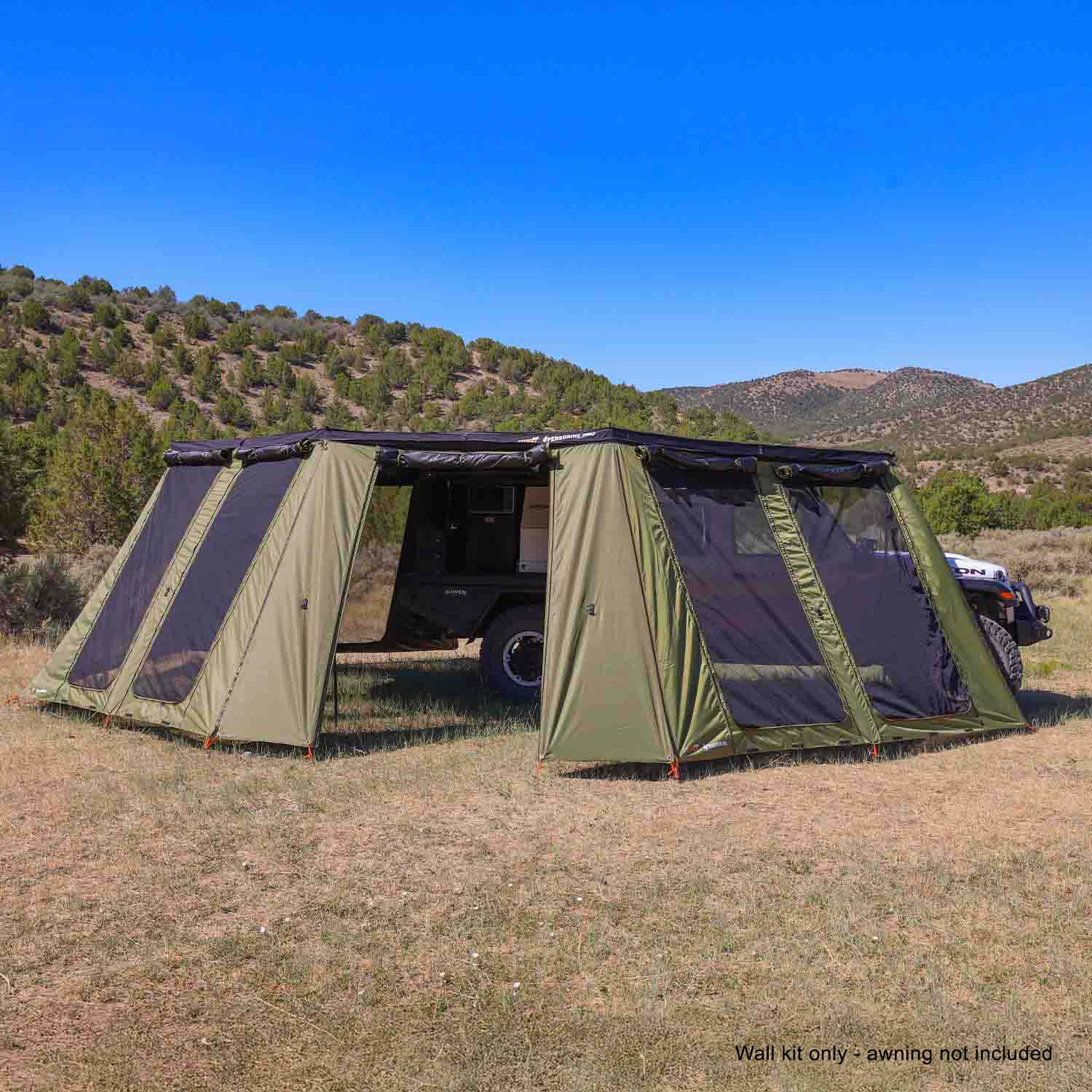
- A look at the new and improved 23ZERO Peregrine Pro 6-Arm 270° Awning Wall Kit
Let’s dive in.
So, What Exactly Is an Awning Wall?
Think of your awning as a roof. It’s great overhead protection, but it’s still open on all sides. An awning wall (sometimes called a shade wall or awning side panel) is just that — a wall you can add on to accessorize and upgrade your awning.
Why bother? Because with one wall you suddenly block that low afternoon sun, or stop the wind from blowing dust into your nachos. Add a few walls and you’ve got a private, shaded living space.
We’ve had countless trips where a quick zip-in wall turned an exposed camp into a comfortable base. It’s one of those upgrades that you don’t realize you needed until you try it. And once you try it, theres no going back.
Why Would I Need Awning Shade Walls?
The short answer? Comfort.
Here are the big reasons people add walls to their setup:
- Shade & Heat Control – Our Light Suppression Technology (LST) blocks harsh light and keeps things cooler. On a hot Utah desert afternoon, you’ll feel the difference immediately as LST has been shown to reduce internal tent temperatures by up to 15% in direct sunlight. If you don’t have access to a portable A/C, LST will provide the relief from the heat you need.
- Wind & Weather Protection – When you’re camped on a ridge and the wind kicks up, a wall makes all the difference. Plus the durability, tear resistance, lightweight, quick-drying, stain-resistant and waterproof properties of the ECO13B fabric are huge advantages to your overlanding or camping setup.
- Privacy – Great for cooking, changing, or just creating a more personal space. Families especially appreciate this and pets do too! Camping in a crowded area? No need to worry as walls will keep you covered, literally!
One of our favorite customer stories came from a dad who said adding walls “turned our awning into the kids’ clubhouse.” That’s exactly the kind of flexible use we had in mind when we designed them. If you don’t have kids, think of awning walls as your pets personal paradise! Awning walls create the perfect space for your furry friends and a Woof Den gives them the comfort they deserve.
Are There Different Types of Awning Walls?
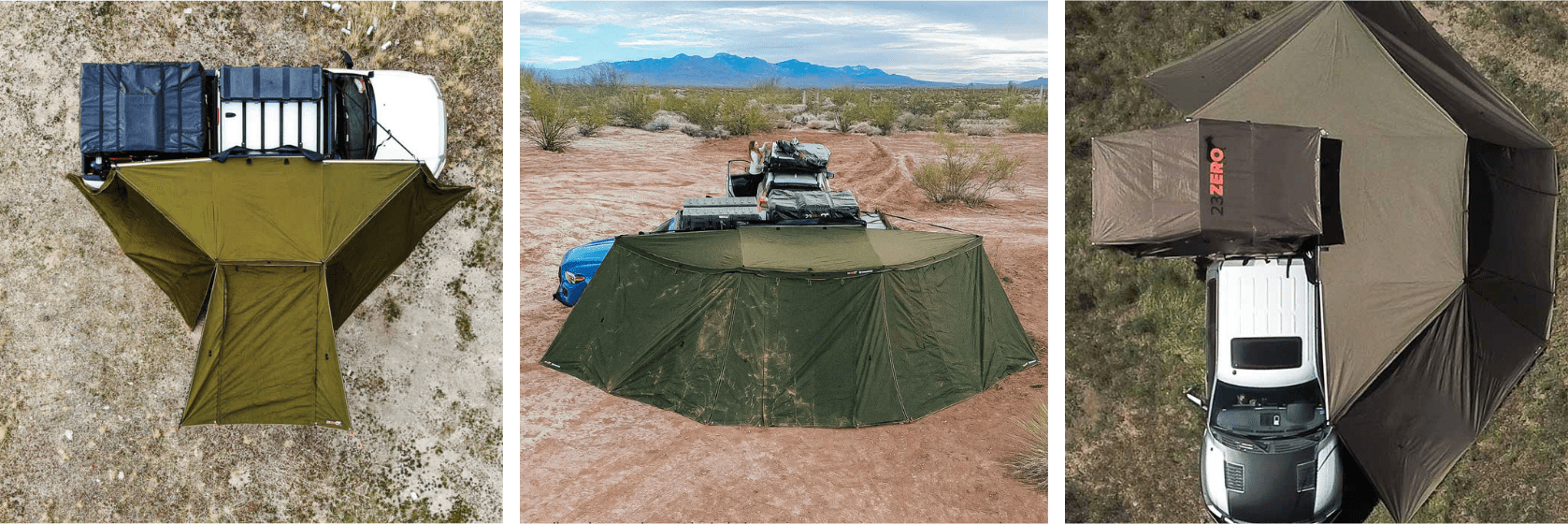
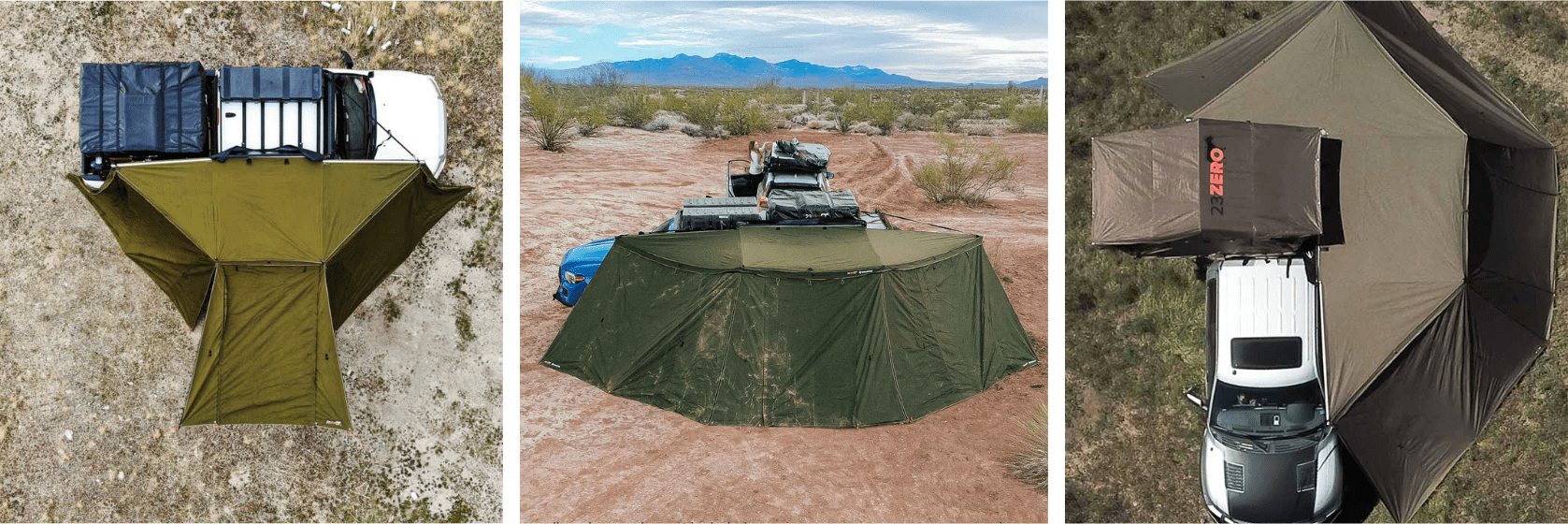
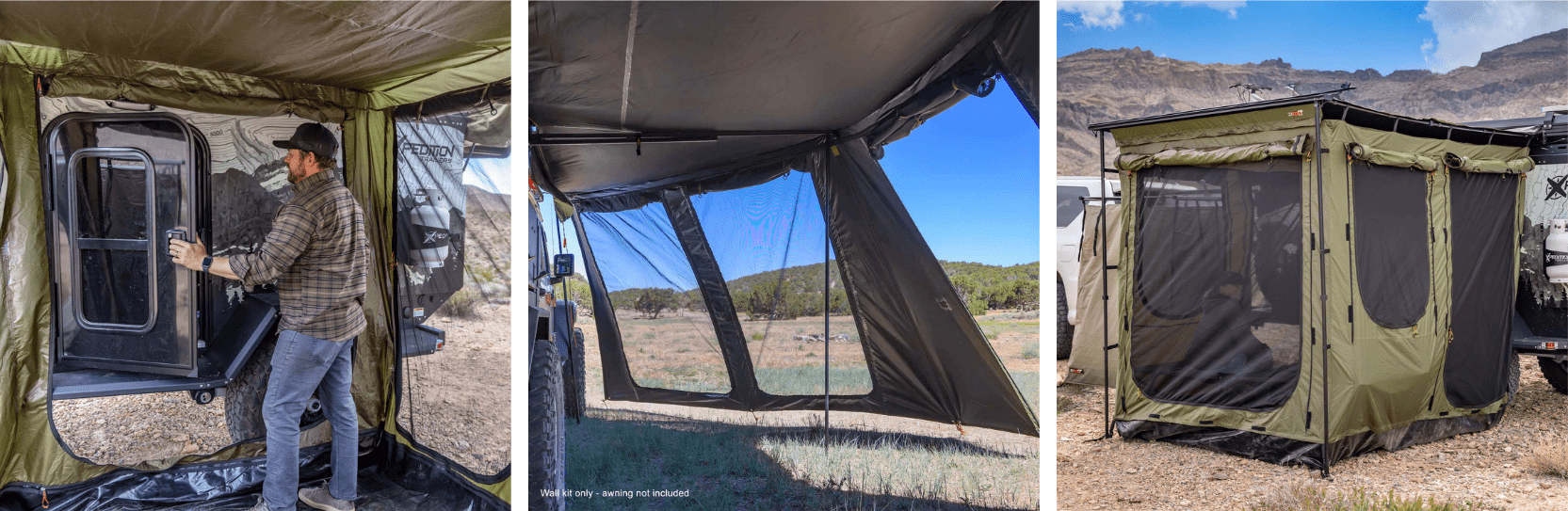
Yes — and that’s where it can get confusing. Not all walls are created equal. Here’s where it can get a little tricky — not everything is technically called a “wall”. For most awnings you’ll see solid, mesh (screened), or modular side panels, but for straight-pull or 90° awnings (like the Bushman Awning) the add-on is often called an awning room, since it fully encloses the space rather than just blocking one or multiple sides all while providing a “floor” as well.
- Solid fabric panels – Maximum shade and privacy.
- Mesh panels – Or screened panels create great airflow, perfect for buggy environments.
- Modular kits – Our Peregrine Pro wall kit, for example, gives you every panel you need in one bag, so you can mix and match as the day changes.
- Awning rooms – (for 90° or straight-pull awnings) Instead of attachable walls, these setups are designed as full rooms that enclose the 90° awning space, creating a tent-like structure. They function differently but serve the same purpose of adding shelter, privacy, and weather protection.
We’ve run them all, and the biggest advice we give is this: think about your climate and your awning. Hot desert? Go with solid LST panels. Humid summer forest? Screens can be your best friend.
How Do I Know Which Awning Wall Fits My Awning?
This is the #1 question we get. The trick is: not every wall works with every awning.
Here’s what to check:
- Awning Style – Straight pull (90°), batwing (180°), wraparound (270°), 5-arm, or 6-arm? Walls are made to fit specific shapes and types of awnings.
- Side Orientation – Driver or passenger side matters. We’ve seen plenty of folks order the wrong one because they didn’t realize orientation is locked in. Just remember, Right Side = U.S. Passenger Side and Left Side = U.S. Driver Side.
- Size – Make sure your kit matches your awning footprint.
With our 23ZERO kits, we try to take the guesswork out. For example, the new Peregrine Pro 270 6-Arm Awning wall kit comes as an all-in-one bag. Every panel, rope, and stake is included. No piecemeal shopping.
Our new wall kits are available in both left-side (U.S. driver side) and right-side (U.S. passenger side) deployments. A good rule of thumb is this: if your rooftop tent opens to the right, pairing it with a left-side awning often gives you the cleanest, most usable camp setup — and vice versa. Just be sure to pair your awning with a kit that matches its deployment side (ex. Left Awning, Left Wall Kit).
A Quick Story From the Field
When we were testing the new Peregrine Pro awning wall kit in our top secret location, we set it up on a family camping trip. Within minutes, the walls were up and suddenly our simple awning had turned into a massive enclosed “living room.”
The kids sprawled on camp chairs, someone set up a stove without the wind stealing the flame, and we just sat back thinking: this is why we built it this way. The Made Better way.
That’s really the heart of it: walls take you from basic cover to a true outdoor living space. Awning shade walls are the perfect solution for outdoor comfort and they help transform your camp into something more than just a place to sleep for the night.



Final Thoughts: Do You Need Awning Side Panels?
If you’re happy with just a roof overhead, maybe not. But if you camp often, deal with unpredictable weather, or just want that little extra comfort — yes, a wall is beyond worth it.
From a single panel to knock out the sun, to a full 270° wall kit that creates a private shelter, they’re one of the most impactful upgrades you can make to your setup.
At 23ZERO, we’ve built our walls with lighter fabric, LST coating, and all-in-one convenience so you don’t have to overthink it. Just grab the kit, set it up, and enjoy the shade.
Because the truth is — once you try camping with walls, you won’t want to go back.
Check out our video with the Wayward Aussie showcasing the new Peregrine Pro 270° 6-Arm Awning Wall Kit
Happy Camping!

Enjoyed This Post?
Discover more tips, gear guides, product reviews, and overlanding insights from the 23ZERO team.
Explore the Blog →