




Hard Shell vs. Soft Shell Rooftop Tents: Which One Is Right for You?
December 17, 2025

If you’re new to overlanding, vehicle based travel, or exploring the world of rooftop tents, it’s completely normal to wonder: what’s the difference between hard shell vs soft shell tents and which style is better for my travels?
At 23Zero, we hear this question every day from people building their first rigs or upgrading from ground tents. Both styles work incredibly well as a tent on top of your car (also called vehicle roof tents, roof tents for cars, overlanding tents, and all kinds of variations), but they offer different benefits depending on how you camp and what you camp with.
Let’s dive into the most common questions — and give you clear, experience-based answers you can trust.
What’s the Difference Between a Hard Shell and a Soft Shell Rooftop Tent?
The main difference comes down to structure and function:
Hard Shell Rooftop Tents
Open and close using a rigid top and bottom shell. They’re fast, simple, and incredibly durable.
Soft Shell Rooftop Tents
Fold out using a fabric body supported by poles and frames. They offer more space options, weight reduction, and better value.


Both get you off the ground, away from uneven terrain, and into a comfortable sleeping setup — the best style depends on how you travel and what you travel with.
Which Rooftop Tent Is More Convenient: Hard Shell or Soft Shell?
If convenience is your top priority, a hard shell rooftop tent wins every time.
Soft shells typically take around eight minutes to tuck, fold, zip, and cover — not difficult, but still a process that you can perfect overtime.
Hard shells tents, like our Armadillo series or Kabari series, require almost no effort. Simply close the lid, latch it, and the internal elastic pulls the fabric inside.
Choose a hard shell if you want:
- Fast setup/pack-down
- Minimal hassle at camp
- Easy daily movement between campsites
This level of convenience is why many overlanders upgrade to a hard shell tent over time.
Which Rooftop Tent Offers More Sleeping Space?
When it comes to hard shell vs soft shell rooftop tents if you need more sleeping room, soft shell rooftop tents are the clear winner.
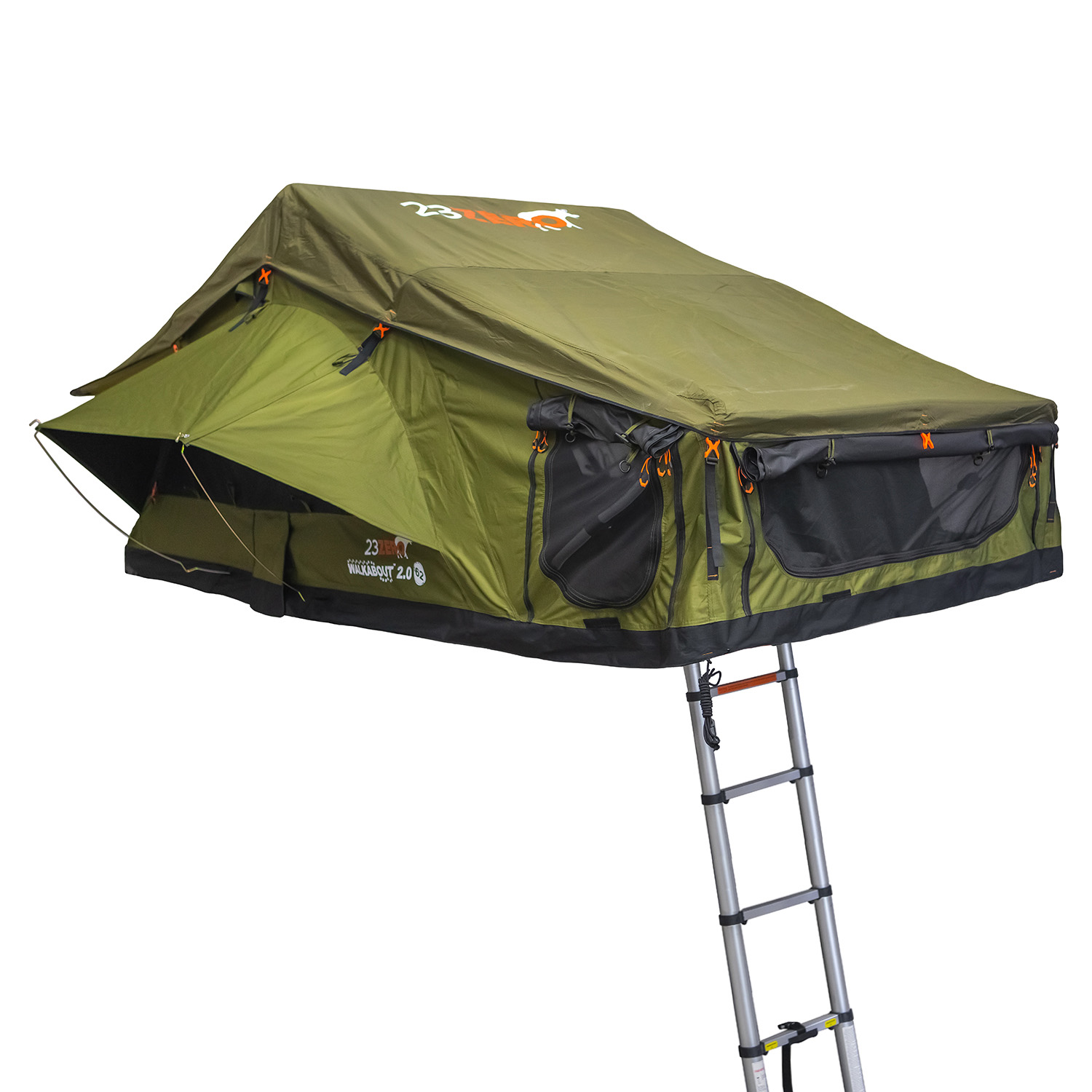
Soft shells offer a wide range of mattress sizes and internal layouts — everything from compact two-person setups to massive family-ready models. Our Walkabout series includes:
Hard shell models, because of their rigid design, offer fewer sizing options. Most are built comfortably to sleep two or three people.
Choose a soft shell if you want:
- Maximum sleeping space
- Family-friendly tent design (our Walkabout 87 fits up to 6 people!)
- Multiple size options
If interior space is your priority, soft shells are unmatched.
Why Are Hard Shell Rooftop Tents More Expensive?
Many customers notice that hard shell tents cost nearly twice as much as soft shell tents. There’s a good reason for that.
Hard shells require:
- Molded lids
- Welded aluminum
- Reinforced shells
- Gas struts or hinge systems
- Complex hardware
- Precision engineering
Soft shells use durable fabric and a simpler lightweight frame structure — which reduces production cost.
Typical comparison:
- Soft shell Walkabout 72 2.0 roof tent→ ~$2,695
- Hard shell Armadillo H2 roof tent→ ~$3,995


You’re paying for speed, durability, and ease of use.
Do Hard Shell vs Soft Shell Rooftop Tents Improve Aerodynamics?
Surprisingly, not as much as most people expect.
Both styles usually close down to roughly 13–15 inches in height. While hard shells can be slightly sleeker, real-world aerodynamic differences are minimal.
You won’t see major fuel savings strictly from choosing one style over the other.
Aerodynamics takeaway:
Pick your tent based on convenience and space, not aerodynamics.
Is a Rooftop Tent Right for Every Camper?
Not always — and that’s perfectly okay.
While rooftop tents are an amazing way to turn your vehicle into an overlanding basecamp, some travelers prefer ground-based shelters. Others don’t want anything mounted to their roof. Some solo travelers want something smaller and easier to transport.
That’s why 23Zero designs more than just rooftop tents.
What Is a Swag, and When Should You Choose One Instead of a Rooftop Tent?
A swag or bedroll is a compact, all-in-one ground shelter with a built-in mattress, poles, and heavy-duty fabric. Think of it as a rugged, comfortable portable bedroll that sets up in seconds.
Swags are incredibly popular in Australia and rapidly growing in the U.S. overlanding community.
A swag may be better than a rooftop tent if you:
- Camp solo
- Want a budget-friendly shelter
- Prefer sleeping closer to the ground
- Don’t want gear mounted on your vehicle’s roof
- Need something lightweight and portable
- Camp in areas where a RTT isn’t practical
23Zero swags feature the same high-quality materials we use in our tents, including our LST® Light Suppression Technology.
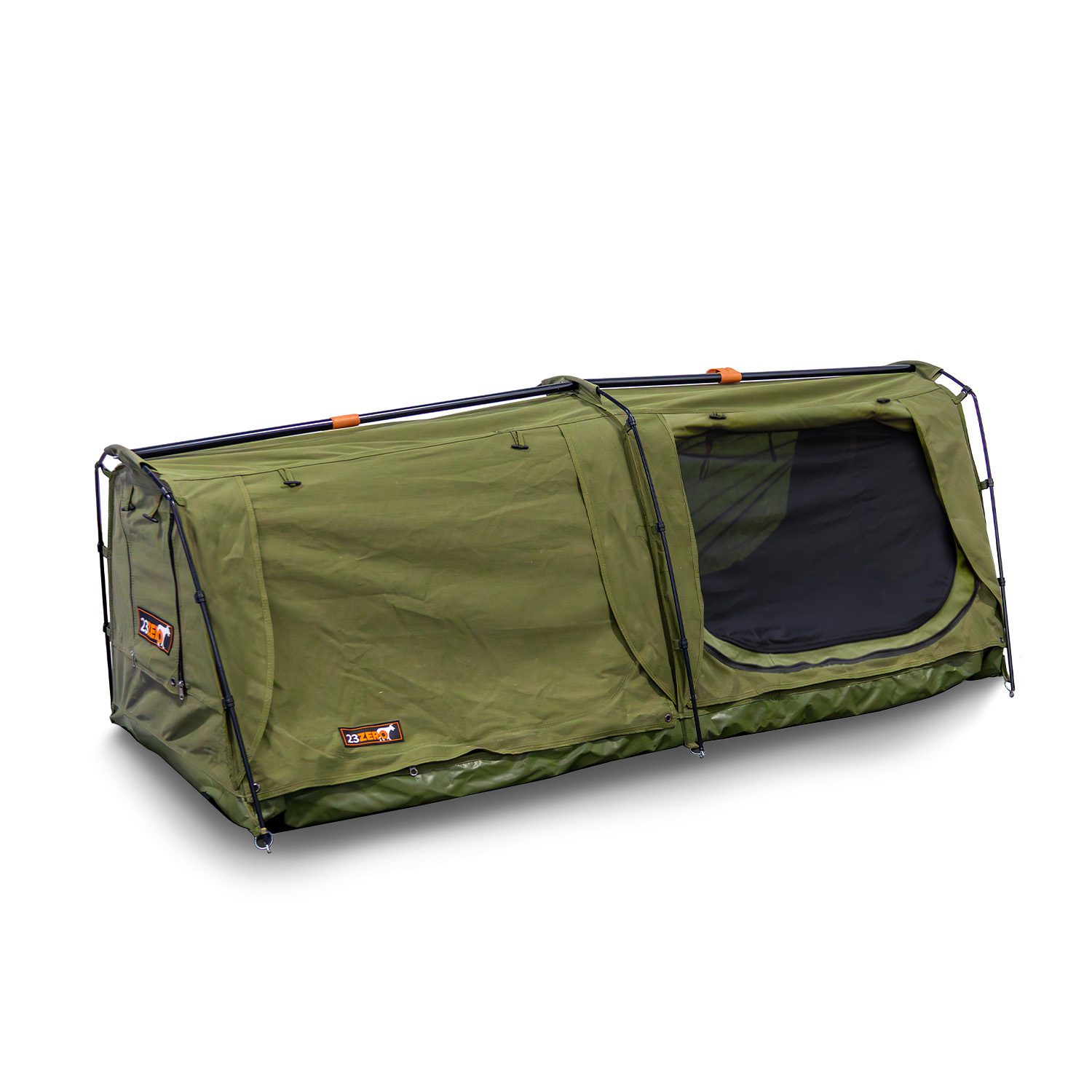

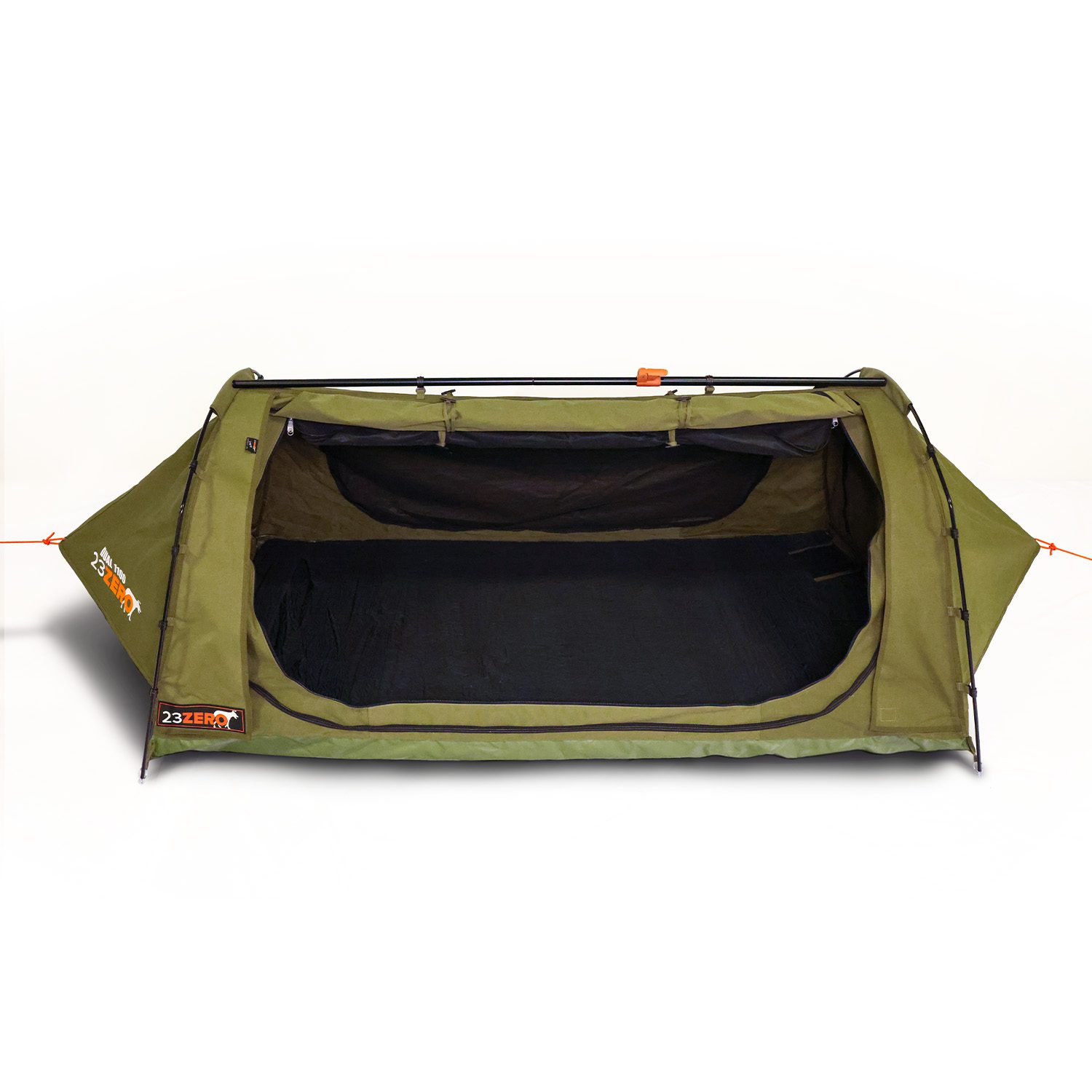

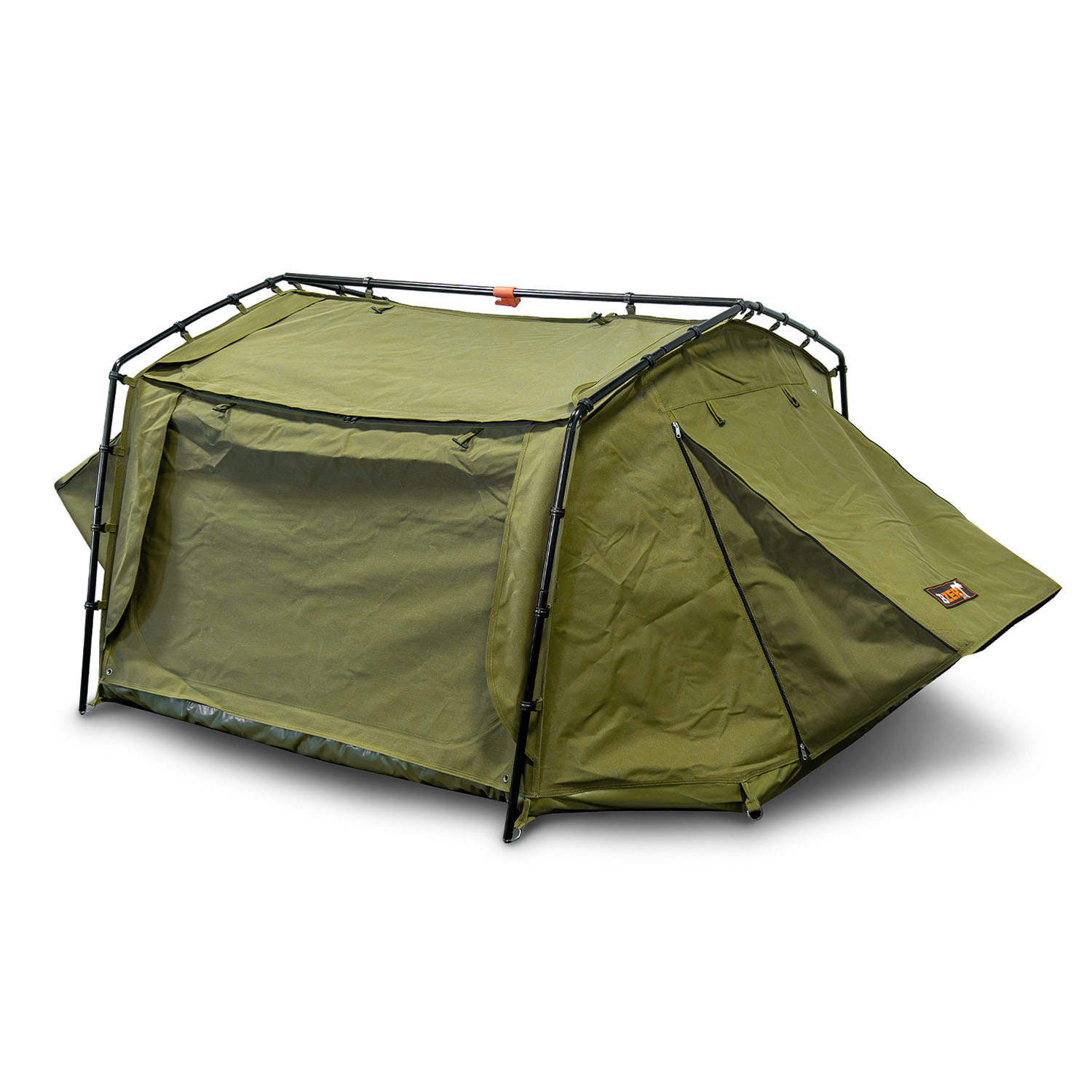

Swags also pair beautifully with vehicle roof tent setups: rooftop tent for the adults — swag for the kids, dogs (Woof Den), or extra guests.
How Do You Choose the Best Tent for Your Vehicle and Camping Style?
Here’s a simple breakdown to help guide your decision.
✔️ Choose a Hard Shell Rooftop Tent if you want:
- The fastest setup possible
- Minimal daily effort
- A durable, compact design
- Ease of movement between campsites
✔️ Choose a Soft Shell Rooftop Tent if you want:
- More sleeping space
- Best value for price
- Family-friendly layouts
- Classic fold-out tent ergonomics
✔️ Choose a Swag if you want:
- A simple, ground-based shelter
- Maximum portability
- Something rugged, quick, and versatile
Final Thoughts: What Does 23Zero Recommend?
No matter whether you choose a hard shell rooftop tent, a soft shell rooftop tent, or one of our premium swags, the goal is always the same:
“Spend more time enjoying the outdoors and less time dealing with your gear“
At 23Zero, every shelter we design is built with real overland travel in mind — durable materials, thoughtful layouts, and features that make setup easier, sleep more comfortable, and mornings simpler. Whether you’re heading out for a weekend escape or planning long-distance adventures, your shelter should work with you, not against you.
Every traveler’s setup is different. Some prioritize speed and convenience. Others want maximum space or a more minimalist approach. That’s why we offer a full range of vehicle roof tents and ground-based options — so you can choose the shelter that truly fits your style of travel, your vehicle, and the way you explore.
If you’re still deciding, you don’t have to figure it out alone. Our team is always happy to help you compare options, answer questions, and find the right 23Zero setup to match your adventures — wherever the road takes you next.
Frequently Asked Questions About Rooftop Tents & Swags
Is a hard shell or soft shell rooftop tent better?
Neither option is universally better — it depends on how you travel. Hard shell rooftop tents prioritize fast setup and convenience, while soft shell rooftop tents offer more interior space and better value for families or longer stays.
Are rooftop tents good for beginners?
Yes. Rooftop tents are a great entry point into overlanding because they provide a comfortable, elevated sleeping area and quick setup compared to traditional ground tents. Soft shell rooftop tents are often the most beginner-friendly due to their space and affordability.
Why are hard shell rooftop tents more expensive?
Hard shell rooftop tents use rigid shells, precision hardware, and mechanical lift systems that increase durability and ease of use. These features add to the cost but also reduce setup time and daily effort.
Do rooftop tents affect fuel economy?
Any tent mounted on top of a vehicle will create some aerodynamic drag, but most rooftop tents — hard shell or soft shell — sit at a similar closed height. In real-world use, fuel economy differences between styles are minimal.
Is a rooftop tent right for every camper?
Not always. Some travelers prefer ground-based shelters, don’t want gear mounted on their roof, or want a simpler setup. That’s why 23Zero offers alternative options like swags for different camping styles.
What is a swag and how is it different from a rooftop tent?
A swag is a compact, all-in-one ground shelter with a built-in mattress. Swags are ideal for solo travelers, minimalist setups, or anyone who wants a durable shelter without mounting a tent on top of their vehicle.
Can you use a swag and a rooftop tent together?
Absolutely. Many campers use a rooftop tent as their primary sleeping space and a swag as an additional option for guests, kids, or solo trips. This combination offers flexibility without compromising comfort.
Hard Shell vs. Soft Shell Rooftop Tents – Video Overview
Still deciding between a hard shell and soft shell rooftop tent? Watch this video from 23Zero as we walk through the real-world differences between these two popular styles of vehicle roof tents, including setup time, sleeping space, price considerations, and which type of roof tent for cars works best for different overlanding needs.
This video is ideal for anyone new to overlanding or researching tents that mount on top of a vehicle. It complements the guide above by visually demonstrating how hard shell and soft shell rooftop tents function, helping you make a confident decision for your next adventure.
Happy Camping!

Enjoyed This Post?
Discover more tips, gear guides, product reviews, and overlanding insights from the 23ZERO team.
Explore the Blog →